

United States:
166 Geary St, 15F, San Francisco, California, United States - 94108
We provide custom manufacturing software development for manufacturers that need ERP, MES, scheduling, quality management, and industrial automation software built for real shop floor operations. These solutions connect production, inventory, and quality workflows to improve WIP tracking, traceability, reporting, and day-to-day execution.













Our manufacturing software solutions support production execution, scheduling, inventory control, quality assurance, and connected operations. Each solution is designed around practical factory needs, from material flow and sequencing to audit records and machine monitoring.
Connect procurement, MRP, inventory, reporting, and production planning in one manufacturing-focused operational system.
Connect machines and sensors for live monitoring, equipment status tracking, downtime alerts, and faster floor response.
Improve stock accuracy, material availability, warehouse movement, and supplier coordination across multiple locations.
Plan schedules, balance capacity, manage bottlenecks, and improve sequencing through tighter production control.
Handle inspections, non-conformance records, CAPA workflows, traceability logs, and corrective actions with consistency.
Track work orders, capture operator and machine inputs, monitor WIP, and maintain real-time shop floor traceability.
Our services cover custom development, legacy upgrades, system integration, automation, and cloud deployment for manufacturing environments. We replace outdated tools, connect core systems, and deliver software that supports real production processes.
Build software around factory workflows, BOM structures, routing, approvals, and traceability requirements.
Use automation, forecasting, anomaly detection, and exception alerts to reduce manual effort.
Deploy cloud, on-premise, or hybrid platforms for centralized access and easier maintenance.
Upgrade aging applications, replace disconnected tools, improve usability, and reduce reporting delays.
Connect ERP, CRM, IoT, warehouse, scheduling, and factory systems across planning and execution.
We build manufacturing software for companies that need reliable systems across production, inventory, quality, and plant operations. Our team combines manufacturing know-how, strong integration capability, and dependable delivery for critical business processes.
Experience working across production systems, plant operations, and enterprise manufacturing environments.
Custom ERP, MES, planning, quality, and integration solutions implemented across different factory setups.
ERP, IoT, warehouse, CRM, and legacy systems connected to support uninterrupted data flow.
From discovery and implementation to ongoing support, we offer delivery models that match different project needs.
Manufacturing software gives teams better control, faster response, and more consistent daily execution. With stronger coordination and live data, manufacturers can reduce delays, control costs, and maintain reliable output.
Reduce delays and improve production flow.
Track jobs, stock, machines, and issues live.
Spot issues early and respond faster.
Cut waste, errors, and manual effort.
Improve inspections, tracking, and traceability.
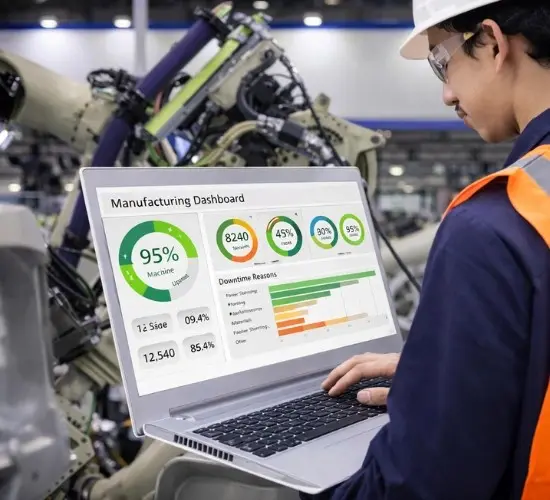
We design and develop manufacturing software that improves production flow, connects systems, and supports accurate planning without disrupting your existing operations.
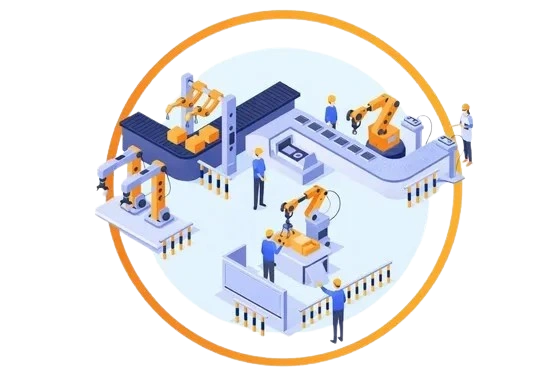
ERP plans production, MES executes it, QMS validates it, and IIoT monitors it in real time.
| System | Main purpose | Primary users | Best used for | How it connects |
|---|---|---|---|---|
| ERP | Planning and business operations | Managers, planners, procurement teams | MRP, purchasing, inventory, reporting | Connects with MES, QMS, WMS, CRM |
| MES | Shop floor execution | Operators, supervisors, plant teams | Work orders, WIP, machine data, traceability | Receives plans from ERP and returns execution status |
| QMS | Quality control and compliance | QA teams, plant managers | Inspections, CAPA, defect tracking, audit trails | Links quality events with ERP and MES data |
| IIoT | Machine and sensor data | Engineers, maintenance, operations | Downtime alerts, monitoring, predictive maintenance | Feeds live equipment data into MES and dashboards |
We choose technologies based on connectivity, performance, security, and long-term maintainability. This helps us build stable software that fits current infrastructure and supports future growth.


Trusted by global brands who rely on our expertise to deliver innovative, high-quality digital solutions.







Here are common questions about cost, timelines, integration, customization, and support.
Manufacturing software development services involve designing, building, integrating, and maintaining software used in factory operations. These systems support production workflows, inventory tracking, planning, and quality processes. They may include ERP, MES, scheduling tools, automation systems, and traceability platforms. The goal is to improve coordination, accuracy, and control across manufacturing environments.
The cost of custom manufacturing software depends on scope, number of modules, integrations, and user requirements. A small internal tool is significantly different from a multi-module system connected to ERP, IoT, or warehouse platforms. Deployment type and data complexity also influence pricing. Most projects require an initial workflow and system assessment to estimate accurately.
Timelines are shaped by solution size, integration complexity, and rollout approach. A focused module, such as inventory or reporting, can be delivered in a few weeks. Larger systems covering planning, production, and quality may take several months. Testing, user adoption, and phased implementation also affect the overall timeline. Each project is usually planned in stages to reduce risk.
Yes, integration is a core part of most manufacturing software projects. Systems such as ERP, CRM, warehouse, IoT devices, and legacy platforms can be connected. The process starts by reviewing current data flow and dependencies across operations. The goal is to enable seamless communication between systems without disrupting ongoing production activities.
Custom manufacturing software is built around your specific processes, not generic templates. This includes production workflows, approval steps, user roles, and reporting structures. It ensures that the system reflects how your teams actually operate on the shop floor. Customization also allows better alignment with traceability, compliance, and operational requirements.
Yes, post-launch support is an essential part of manufacturing software delivery. This includes maintenance, performance monitoring, issue resolution, and system updates. It helps ensure the software remains stable as production needs evolve. Ongoing support may also include enhancements, user assistance, and system optimization over time.
A single solution can support multiple functions such as production planning, inventory management, quality control, and traceability. It can also include reporting, shop-floor tracking, and workflow automation. The final structure depends on your operational model and integration requirements. Many manufacturers start with one area and expand the system gradually.
The right deployment model depends on infrastructure, security policies, and operational needs. Cloud platforms offer easier access, scalability, and centralized data across multiple sites. On-premise systems provide more control in environments with strict security or connectivity limitations. Many manufacturers adopt a hybrid approach to balance flexibility and control.
United States:
166 Geary St, 15F, San Francisco, California, United States - 94108

United Kingdom:
30 Charter Avenue, Coventry
CV4 8GE Post code: CV4 8GF United Kingdom

United Arab Emirates:
Unit No: 729, DMCC Business Centre Level No 1, Jewellery & Gemplex 3 Dubai, United Arab Emirates

India:
715, Astralis, Supernova, Sector 94 Noida, Delhi NCR India. 201301

Qatar:
B-ring road zone 25, Bin Dirham Plaza building 113, Street 220, 5th floor office 510 Doha, Qatar

© 2026 SDLC Corp. All Rights Reserved.